Robin Zeng: Unlocking the Sustainable Energy Era with Zero-Carbon Technology
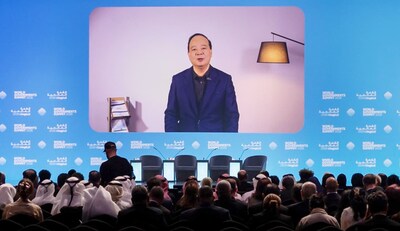
Throughout human history, energy has been the driving force behind civilization's growth. Every major leap in human development has been accompanied by an energy revolution. Today, we are experiencing another revolutionary energy shift, one comparable to humanity's transition from hunter-gatherers to agricultural societies -- from an era where we track down and gather fossil fuels, to one where we can harvest energy in wind and solar farms and store it in batteries.
This revolution is enabled by science and technology progress, which delivers practical solutions and drives down costs. According to the IEA and BNEF, over the past decade, the cost of LFP batteries and solar has fallen by about 80%. Sustainable energy solutions have evolved from being technically feasible to becoming an economically compelling choice.
A similar transformation is underway in industrial applications. In
In
These developments point to a broader reality: in many regions, clean energy is being adopted not just for climate goals, but also because technological progress has made it the most commercially viable option.
We are embracing the profound shift towards a net-zero energy era. The future energy system, to my mind, can be defined by three words: distributed, intelligent, circular.
First, distributed power systems, which include renewable generation and advanced battery storage, will mushroom across the world, especially in areas with weak grid infrastructure. This will replace a lot of fossil fuel energy, which is centralized and relies heavily on large-scale power plants and a strong grid.
However, a high proportion of renewable energy introduces new challenges to the stable operation of power systems. To address those challenges,
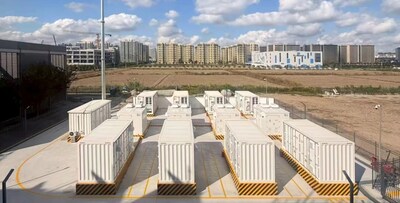
This technology has been successfully validated in engineering, and in
Beyond being distributed, future energy systems will be more intelligent. They will be able to handle vast amounts of data and adjust to fluctuations in renewable power generation and consumption. Advanced AI-driven scheduling and optimization will be required to balance energy supply and demand. For instance, we use AI to enhance energy system management for SenseTime's
Thirdly, circular economy is crucial for achieving zero-carbon energy. Unlike fossil fuels, which are burned upon use, materials for zero-carbon energy systems can be recycled.
Driven by continued progress in zero-carbon technologies, a sustainable energy era is no longer a distant vision — it is approaching rapidly. In my estimate, 2030 will mark the true beginning of the sustainable energy era.
How can we get there? My answer is: science shows us what is possible, but engineering and manufacturing determine how fast we get there.
Basic science remains the ultimate source of transformation. Breakthroughs in material science, artificial intelligence, and new energy systems will continue to shape what the future can look like. To be honest, with today's technologies, we may have solved less than 30% of what a fully sustainable energy system require. Many disruptive technologies have yet to emerge, and much foundational research still lies ahead.
For technology to truly change the world, it must move beyond labs and be deployed at scale. Today, we have made scientific and technological breakthroughs in frontier areas such as condensed batteries, solid-state batteries, and perovskite solar batteries. Yet there is still much more to do to scale these innovations from the lab to the market. That is why we are investing heavily in R&D – more than all other players in the industry combined.
While fighting global warming appears to be a climate issue, it is in essence an energy issue, and fundamentally, a development issue. We believe international cooperation is the most efficient way to tackle it, and we are willing to share battery technologies and experiences with the world. We have evolved from exporting batteries in the early days, to "local production, for local markets" now. We are also licensing technologies to our partners to help them build their own battery plants.
To accelerate the transition to a sustainable energy era, we need to scale up advanced energy technologies in a more efficient and affordable manner globally. However, in some markets, in our experience, building and equipment regulations are the cause of higher cost of production. I would like to propose a solution: setting up special economic zones that adopt similar regulations of building and equipment which are practiced in
Ladies and gentlemen, a recent study by
As a pioneer of the energy transition,
 View original content to download multimedia:https://www.prnewswire.com/news-releases/robin-zeng-unlocking-the-sustainable-energy-era-with-zero-carbon-technology-302679261.html
SOURCE
