Tiger Gold Intersects 191.2 m at 0.6 g/t Au at Tesorito and Identifies New Vectors Towards Untested Extensions
Highlights:
- TSDH-74 interested 191.2 m at 0.6 g/t Au 22.8 m downhole.
- TSDH-72 intersected 73.6 m at 0.5 g/t Au from surface and 65 m at 0.7 g/t Au from 85 m.
- TSDH-73 intersected 125.35 m at 0.4 g/t Au from 60 m downhole and ended in mineralization.
- New strong vectors suggest Tesorito remains open to the south and southeast with drilling underway now to test the southeast target for near-surface mineralization.
- Two rigs continue infill and extension drilling at Tesorito.
- A third rig continues exploration drilling at Dos Quebradas and has started its second hole.
- Assays pending from additional drillholes and will be reported in due course.
Drilling results are summarized in Table 1 and 2 below. Figure 1 shows the location of these drillholes, together with drillholes for which assays are pending. Figure 2 is a cross section of the reported results. Figure 3 is a regional map showing the deposits and high-priority prospects of the Quinchía
Tesorito Drill Program Targets Resource Growth and Improved Confidence
The Tesorito drill program is designed to improve confidence in the Mineral Resource and to test margins and depth extensions to expand known mineralization. Drilling includes both step-out and infill components, with infill drilling intended to support upgrading a significant portion of the Inferred Mineral Resource to the Indicated category and advance the project towards a pre-feasibility or feasibility-level study. A summary of Mineral Resources and the Preliminary Economic Assessment ("PEA") for the Quinchía
More Results Expected Shortly as Drilling Continues at Tesorito and Dos Quebradas
Drilling is ongoing with two diamond drill rigs at Tesorito, and additional assay results are anticipated in the coming weeks. A third rig recently commenced drilling at Dos Quebradas, executing upon the Company's plan to test high-impact targets across the Quinchía
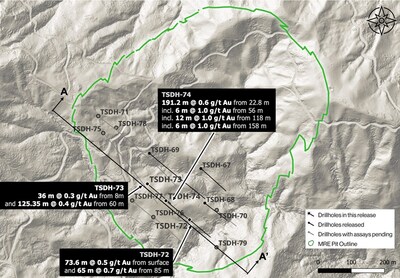

Table 1: TSDH-72, TSDH-73, and TSDH-74 Assays Results
|
Drillhole |
From |
To |
Interval |
True Width |
Au |
|
ID |
(m) |
(m) |
(m) |
(m) |
(g/t) |
|
TSDH-72 |
0 |
73.6 |
73.6 |
57.4 |
0.5 |
|
and |
85 |
150 |
65 |
55.8 |
0.7 |
|
TSDH-73 |
8 |
44 |
36 |
31.0 |
0.3 |
|
and |
60 |
185.35 |
125.35 |
107.4 |
0.4 |
|
TSDH-74 |
22.8 |
214 |
191.2 |
160.3 |
0.6 |
|
incl. |
56 |
62 |
6 |
5.1 |
1.0 |
|
incl. |
118 |
130 |
12 |
10.1 |
1.0 |
|
incl. |
158 |
164 |
6 |
5.0 |
1.0 |
|
|
1. All composite intervals are reported over a minimum downhole length of 10 m at a minimum length-weighted grade of 0.2 g/t Au, allowing for up to 10 m of consecutive internal dilution below cut-off. |
|
|
2. All reported intervals refer to downhole core lengths. True width estimates are based upon the Company's current interpretation. |
|
|
3. Higher-grade intervals, if any, reported as any interval over a minimum length of 5 m at a minimum length-weighted grade of 1 g/t Au, allowing for up to 5 m of consecutive internal dilution below cut-off. No assays were capped. |
Table 2: Drillhole Collar Information (EPSG:32618)
|
Drillhole |
Easting |
Northing |
Elevation |
Length |
Azimuth |
Dip |
|
ID |
(m) |
(m) |
(m asl) |
(m) |
(°) |
(°) |
|
TSDH-72 |
423,750 |
584,345 |
1,257 |
164.3 |
130 |
-60 |
|
TSDH-73 |
423,625 |
584,455 |
1,298 |
185.35 |
130 |
-60 |
|
TSDH-74 |
423,680 |
584,400 |
1,290 |
217.15 |
130 |
-60 |
TSDH-74 Delivers 191.2 m at 0.6 g/t Au with Strong Alteration and Veining
TSDH-74 intersected 191.2 m grading 0.6 g/t Au from 22.8 m to 214 m downhole, including 6.0 m grading 1.0 g/t Au (56-62 m), 12.0 m grading 1.0 g/t Au (118-130 m), and 6.0 m grading 1.0 g/t Au (158-164 m). The hole was drilled through shallow soil and colluvium and was logged predominantly in porphyry andesite and terminated after the Marmato Fault in sandstone.
The principal porphyry-style interval occurs from 130 m to 215.55 m and is characterised by moderate potassic alteration (secondary biotite and potassium-feldspar) that is locally patchy downhole and overprinted by chlorite-sericite alteration. Veining is dominated by M-type veinlets (generally <2 per metre) with B-type veinlets locally developed (typically <1 to <3 per metre) comprising quartz + pyrite + molybdenite ± gypsum ± chalcopyrite. Pyrite and magnetite occur as disseminations and stringers (pyrite visually estimated at approximately 0.8-1.0% in key intervals), with molybdenum repeatedly noted and chalcopyrite present locally.
The porphyry-style interval is also affected by a late gypsum veinlet event (commonly 6-8 veinlets per metre) with local evidence of structural reworking providing conduits for fluid flow. Based upon the Company's current interpretation, the combination of potassic alteration remnants together with molybdenum-bearing B-type veining and local chalcopyrite supports proximity to the broader porphyry system at Tesorito, while the abundant gypsum veining is interpreted to reflect a significant late-stage hydrothermal and/or structural overprint in this part of the system.
These observations strengthen the Company's confidence in the porphyry system vectors at Tesorito and will help prioritise follow-up drilling and modelling as the program advances.
TSDH-73 Closes a Key Near Surface Data Gap in the South-Central Portion of Tesorito
TSDH-73 intersected 36 m grading 0.3 g/t Au (8-44 m downhole) and 125.35 m grading 0.4 g/t Au from 60 m until the end of hole (185.35 m) and ended in mineralization. The hole was drilled in the south-central portion of the deposit to gather near surface geological and assay data in a sparsely drilled area and was terminated within an area that has been previously well drilled.
TSDH-73 intersected porphyry andesite from 8 m to end of hole (185.35 m) beneath a thin cover of colluvium. A porphyry-style mineralization was logged from 171.2 m to end of hole, marked by very weak to weak potassic alteration (secondary biotite) overprinted by chlorite-sericite alteration and an increase in porphyry-style veining. Veining is dominated by M-type veinlets (2 -5 per metre) with minor B-type veins (including quartz plus potassium feldspar) and D-type veins also present. The interval also contains frequent gypsum ± molybdenite veinlets (5-8 per metre), pyrite veining, magnetite stringers, and calcite fracturing.
TSDH-72 Delivers Strong Vectors Toward East and Southeast Extensions
Beginning at surface, TSDH-72 intersected 73.6 m grading 0.5 g/t Au and 65 m grading 0.7 g/t Au from 85 m to 150 m downhole. The hole was drilled to evaluate gold mineralization along the eastern margins of the Mineral Resource conceptual pit outline. TSDH-72 intersected predominantly andesite porphyry with potassic plus chlorite-sericite alteration from approximately 13 m to 146 m, including an intra-mineral diorite unit (74-87 m), and terminated in the Marmato Fault.
The higher-grade interval from 85-150 m (0.7 g/t Au over 65 m) overlaps with a zone of high-temperature veining, including the 99-133 m interval where B-type veinlet frequency increases (locally 10-15 veinlets per metre). Veining in this zone is dominated by B-type veinlets (quartz plus potassium feldspar plus pyrite ± chalcopyrite ± molybdenite), with M-type veinlets also present throughout and subordinate D-type veins. Disseminated and stringer sulphides were logged as magnetite plus pyrite (visual estimates of approximately 0.4-1%), with chalcopyrite reported in multiple intervals associated with B-type veining and molybdenite identified locally, including molybdenite with gypsum veinlets at approximately 99 m. Gypsum veinlets are common throughout the hole (5-15 veinlets per metre), together with calcite fractures, consistent with late-stage hydrothermal veining and/or overprinting.
From approximately 147 m to end of hole, TSDH-72 entered a sandstone unit with chlorite-sericite alteration and irregular calcite plus pyrite veining, marking a significant change in lithology and alteration style. Based upon the Company's current interpretation, the observed alteration assemblage, locally high densities of B-type veining, and the presence of chalcopyrite and molybdenite are interpreted to be strong vectors within the broader Tesorito porphyry system and suggest the system remains open to the south and southeast. Follow-up exploration and drilling to test these vectors is planned as part of the current drill program and is coincident with a surface molybdenum anomaly located approximately 150 m southeast of the current Mineral Resource. Drilling to test this target is now underway with drillhole TSDH-79. Additionally, TSDH-72 returned higher-than-modelled intercepts that extend locally beyond the current Mineral Resource conceptual pit shell on the southeastern margin, highlighting the potential for future resource growth.
Also of significant interest, intermediate sulfidation-style (ISS) veins containing pyrite ± chalcopyrite ± molybdenite were logged in the 12.3-13.1 m and 18.2-20.05 m intervals, including a carbonate-matrix breccia. These features may reflect a meaningful hydrothermal overprint and/or zonation in this zone and further support the continued search for and evaluation of vectors toward potential lateral targets and deposit extensions at Tesorito.
Mineral Resources and PEA
Quinchia Gold Project PEA
A report titled Quinchía Gold Project NI 43-101 Technical Report & Preliminary Economic Assessment,

The PEA base case evaluated the Quinchía
The PEA is, by definition, preliminary in nature and includes Inferred Mineral Resources that are considered too speculative geologically to have the economic considerations applied to them that would enable them to be categorized as Mineral Reserves, and there is no certainty that the PEA results will be realized. The results of the economic analyses represent forward-looking information and are subject to known and unknown risks, uncertainties and other factors that may cause actual results to differ materially from those presented.
The Technical Report includes Mineral Resource estimates for the Miraflores and Tesorito deposits with an effective date of
Tesorito Gold Deposit
At an open-pit cut-off grade of 0.20 g/t Au:
- Inferred: 104 Mt at 0.47 g/t Au for 1.57
Moz Au , and 0.58 g/t Ag for 1.96Moz Ag
Miraflores Gold Deposit
At an underground cut-off grade of 1.37 g/t gold equivalent ("AuEq"):
- Measured: 2.8 Mt at 2.75 g/t Au for 0.24
Moz Au , and 2.37 g/t Ag for 0.21Moz Ag - Indicated: 3.3 Mt at 2.52 g/t Au for 0.27
Moz Au , and 2.20 g/t Ag for 0.23Moz Ag - Measured + Indicated: 6.1 Mt at 2.62 g/t Au for 0.51
Moz Au , and 2.28 g/t Ag for 0.44Moz Ag - Inferred: 0.08 Mt at 2.81 g/t Au for 0.01
Moz Au , and 2.54 g/t Ag for 0.01Moz Ag
Sampling, Quality Assurance and Quality Control
All drill core is logged by a Company geologist, photographed, and cut in half at the Company's core facility in Quinchía,
Qualified Person
The pertinent scientific and technical information contained in this release has been reviewed and approved by
About
Tiger is a growth-oriented mining, exploration, and development company focused on advancing its flagship asset, the Quinchía
Neither the
Cautionary Note Regarding Forward-looking Statements
This news release contains forward-looking information and forward-looking statements, as such terms are defined under applicable securities laws (collectively, "forward-looking statements"). Often, but not always, forward-looking statements can be identified by the use of words such as "plans", "expects" or "does not expect", "is expected", "estimates", "budget", "scheduled", "forecasts", "projects", "intends", "suggests", "preliminary", "confident", "interpreted", "targets", "aims", "anticipates" or "does not anticipate", or "believes", or variations of such words and phrases, or statements that certain actions, events or results "may", "could", "can", "would", "might" or "will" be taken, occur or be achieved. Forward-looking statements involve known and unknown risks, uncertainties, assumptions (which may prove incorrect) and other factors which may cause the actual results, performance or achievements of Tiger to be materially different from any future results, performance or achievements expressed or implied by the forward-looking statements.
Forward-looking information in this news release includes, but is not limited to, statements regarding Tiger's objectives, goals or future plans; statements regarding exploration results, potential mineralization, potential feeder zones and potential porphyry centres, lateral extensions, and the potential to expand mineralization or improve grade, including through infill, extension, and step-out drilling; Tiger's plans to execute and complete its Phase 1 and Phase 2 exploration programs, including drill programs and Mineral Resource estimate updates; statements regarding planned field programs and future technical studies, including preliminary feasibility or feasibility-level studies; exploration and project development plans at the Quinchía
Factors that could cause actual results to differ materially from such forward-looking information include, but are not limited to, failure to intersect potentially economic intervals of mineralization; uncertainties related to geological continuity, potential mineralization and the extent of mineralization, which may not yield economically viable results; additional mineralized zones that may not contain economically viable mineralization due to geological complexity or insufficient drilling data; risks that historical drilling data may be incomplete, inaccurate, or insufficient; risks that field programs may be reduced, delayed or may not proceed at all; risks that the Company may not satisfy minimum expenditure requirements or other work commitments under its property agreements (including option or earn-in agreements), which could adversely affect the Company's ability to maintain or earn its interest in the project; delays in assay processing or data validation issues; failure to identify Mineral Resources; the preliminary nature of metallurgical test results; delays in obtaining or failures to obtain required governmental, environmental, or other project approvals; changes in governmental regulation of exploration and mining operations; political risks and social unrest; inability to fulfil consultation or accommodation obligations in respect of Indigenous peoples or to maintain constructive relationships with local communities; uncertainties relating to the availability and costs of financing needed in the future; changes in equity markets; inflation; changes in exchange rates; fluctuations in commodity prices; delays in the advancement of projects; capital and operating costs varying significantly from estimates; and the other risks involved in the mineral exploration and development industry.
While Tiger anticipates that subsequent events and developments may cause its views to change, Tiger specifically disclaims any obligation to update these forward-looking statements. These forward-looking statements should not be relied upon as representing Tiger's views as of any date subsequent to the date of this news release. Although Tiger has attempted to identify important factors that could cause actual actions, events or results to differ materially from those described in forward-looking statements, there may be other factors that cause actions, events or results not to be as anticipated, estimated or intended. There can be no assurance that forward-looking statements will prove to be accurate, as actual results and future events could differ materially from those anticipated in such statements. Accordingly, readers should not place undue reliance on forward-looking statements.
The factors identified above are not intended to represent a complete list of the factors that could affect Tiger. Additional factors are noted under "Risk Factors" in Tiger's public disclosure record, including in the filing statement and other documents available under Tiger's profile on SEDAR+. The forward-looking statements contained in this news release are expressly qualified in their entirety by this cautionary statement. The forward-looking statements included in this news release are made as of the date of this news release and Tiger undertakes no obligation to publicly update such forward-looking statements to reflect new information, subsequent events, or otherwise unless required by applicable securities legislation.
Cautionary Note on Non-IFRS Measures
The Company prepares its financial statements in accordance with International Financial Reporting Standards ("IFRS"). The Company believes that investors use certain non-IFRS as indicators to assess mining companies and projects. They are intended to provide additional information and should not be considered in isolation or as a substitute for performance measures prepared in accordance with IFRS. "Total cash costs per ounce" and "all-in sustaining costs per ounce", as used in this release, are non-IFRS measures commonly reported by gold mining companies to assess operating performance on a unit of production basis and the ability of a company to generate cash flow from operations. These measures do not have standardized meanings under IFRS and may not be comparable to similar measures presented by other companies. In this context, "total cash costs" consist of operating cash costs plus royalties and offsite charges (refining and transportation). "All-in sustaining costs" consists of total cash costs plus sustaining capital but excludes corporate and administrative costs and share-based compensation.

SOURCE
