Most Large U.S. Housing Markets Are Shifting in Buyers' Favor, But the Story Varies Widely by Metro
Realtor.com ® Introduces the Realtor.com ® Market Clock , a New Tool That Distills Local Housing Conditions Into a Measure of Whether It's a Buyer, Seller or Balanced Market and Where It's Headed
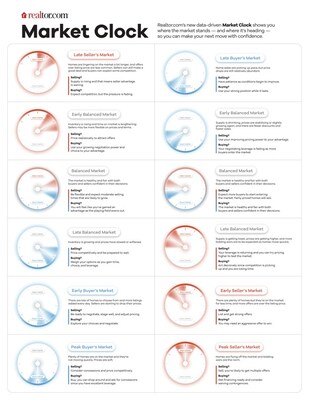
The Realtor.com® Market Clock places the national housing market at 3 o'clock — a "Balanced-Loosening" phase, heading toward buyer-friendly conditions, though not necessarily approaching them quickly. But that national reading masks striking variation across the country's 50 largest metros, which currently span nearly the full face of the clock.
Of the top 50 metros, 13 (26%) remain seller's markets, 23 (46%) are in balanced-loosening phases, 8 (16%) are buyer's markets, and 6 (12%) are in balanced-tightening territory — meaning a small but notable group of markets are actually trending back toward seller advantage.
"A national picture is useful, but when making a real estate decision, the local details are what really matter," said
A Buyer-Friendly South and West, With Pockets of Seller Strength in the Midwest and Northeast
The regional picture is varied, with all 8 buyer's markets located in the South (7) or West (1). and most of the 13 seller's markets coming from the Midwest (7) and Northeast (3). Of the metros currently classified as buyer's markets, 5 of 8 are in either
By contrast, most seller's markets are concentrated in the Midwest and Northeast. Four markets among the top 50, including
A further 8 of the top 50 markets sit at 4 o'clock, or in the Late Balanced phase of the Market Clock. While these metros – which include
The New Realtor.com ® Market Clock
The Realtor.com® Market Clock is a new tool based on key market signals like market balance, market pressure and market pace with the goal of helping people understand their local markets. The market clock is organized as a 12-hour clockface. Seller-leaning conditions occupy the top of the clock (the 11, 12, and 1 o'clock positions), buyer-leaning conditions fall toward the bottom (5, 6, and 7 o'clock), and balanced phases occupy the space in between — with one set loosening toward buyers (2, 3, 4 o'clock) and the other tightening back toward sellers (8, 9, 10 o'clock). At 12 o'clock, conditions favor sellers most: homes sell quickly, competition is fierce, and buyers have limited leverage. At 6 o'clock, the market favors buyers: there's more inventory, less urgency, and more room to negotiate.
The framework is built on metro-level housing data tracking supply and inventory balance, market pace and competition, and pricing pressure and adjustment. Grounded in data, the Realtor.com® Market Clock is built using consistent, metro-level housing market information that tracks conditions over time, allowing markets to be compared both across geographies and across different points in the cycle. Critically, the clock captures not just where a market stands, but how fast and in which direction it is moving — a distinction that matters significantly in markets currently in transition.
"Consumers and professionals are exposed to more information than ever before, but more data hasn't always meant more clarity for people trying to make one of the biggest financial decisions of their lives," said Hale. "The Market Clock is our attempt to change that — to take the full range of signals we track and translate them into something that reflects what the market actually feels like on the ground."
The Realtor.com® Market Clock is designed to describe current conditions and track shifts in leverage over time — not to forecast home prices, sales volumes, or mortgage rates. A market moving into buyer-friendly territory does not guarantee price declines, just as a seller's market does not ensure continued price appreciation.
A Framework Validated by the Last Cycle
The Market Clock's track record from 2019 through 2025 reflects the housing cycle that consumers and industry professionals have lived through. In
By
The rate shock of 2022 began to shift conditions, and by
How Buyers and Sellers Can Use the Market Clock
For anyone interested in buying and selling now or in the future, the Market Clock is designed to help set expectations. Buyers can use their metro's position to gauge how competitive local conditions are, how quickly they may need to act, and how much negotiating room it is realistic to expect. Sellers can use it to help calibrate pricing strategy and understand whether patience or flexibility is likely to be rewarded in their market.
"Whether you're a first-time buyer trying to figure out how aggressive your offer needs to be, or a seller wondering whether to hold firm on price, the Realtor.com market clock is a much needed solution for today's buyers and sellers," said
The Realtor.com® Market Clock is available as part of Realtor.com® Economics housing market research portal and the report will be updated on a quarterly basis.
|
Quadrant |
Region |
Metro |
Clock Hour |
Hour |
|
Seller's Markets 13 metros
(3 Northeast, 7 |
Midwest |
|
11 |
Early Seller |
|
Midwest |
|
11 |
Early Seller |
|
|
Midwest |
|
11 |
Early Seller |
|
|
Midwest |
|
11 |
Early Seller |
|
|
Northeast |
Providence- |
11 |
Early Seller |
|
|
West |
|
11 |
Early Seller |
|
|
Midwest |
|
12 |
Peak Seller |
|
|
Midwest |
|
12 |
Peak Seller |
|
|
Northeast |
|
12 |
Peak Seller |
|
|
South |
|
12 |
Peak Seller |
|
|
Midwest |
|
1 |
Late Seller |
|
|
Northeast |
|
1 |
Late Seller |
|
|
West |
|
1 |
Late Seller |
|
|
Balanced -
23 metros + |
South |
|
2 |
Early |
|
South |
|
2 |
Early |
|
|
West |
|
2 |
Early |
|
|
West |
|
2 |
Early |
|
|
West |
|
2 |
Early |
|
|
West |
|
2 |
Early |
|
|
West |
|
2 |
Early |
|
|
|
|
3 |
Balanced - |
|
|
Midwest |
|
3 |
Balanced - |
|
|
Midwest |
|
3 |
Balanced - |
|
|
Northeast |
|
3 |
Balanced - |
|
|
South |
|
3 |
Balanced - Cooling |
|
|
South |
|
3 |
Balanced - |
|
|
South |
|
3 |
Balanced - |
|
|
South |
|
3 |
Balanced - |
|
|
South |
|
3 |
Balanced - |
|
|
Midwest |
|
4 |
Late |
|
|
South |
|
4 |
Late |
|
|
South |
|
4 |
Late |
|
|
South |
|
4 |
Late |
|
|
South |
|
4 |
Late |
|
|
South |
|
4 |
Late |
|
|
West |
|
4 |
Late |
|
|
West |
|
4 |
Late |
|
|
Buyer's Markets 8 metros
(0 Northeast, 0 |
South |
|
5 |
Early Buyer |
|
South |
|
5 |
Early Buyer |
|
|
South |
|
5 |
Early Buyer |
|
|
South |
|
5 |
Early Buyer |
|
|
South |
|
5 |
Early Buyer |
|
|
South |
|
5 |
Early Buyer |
|
|
South |
|
5 |
Early Buyer |
|
|
West |
|
5 |
Early Buyer |
|
|
Balanced - 6 metros
(3 Northeast, 1 |
Midwest |
|
9 |
Balanced - |
|
Northeast |
|
9 |
Balanced - |
|
|
Northeast |
Buffalo-Cheektowaga-Niagara |
10 |
Late |
|
|
Northeast |
|
10 |
Late |
|
|
West |
|
10 |
Late Balanced |
|
|
West |
|
10 |
Late |
Methodology
The Realtor.com® Market Clock is built on Realtor.com® housing market data and analysis of deed records to classify the top 50 U.S. metropolitan areas and a national aggregate into one of 12 phases of the buyer-seller leverage cycle. The framework synthesizes measures of market balance, pace and momentum, and pricing pressure into a single clock position for each metro. Data will be updated monthly and a report released quarterly. Data span
About Realtor.com
®
Realtor.com
® pioneered online real estate and has been at the forefront for over 25 years, connecting buyers, sellers, and renters with trusted insights, professional guidance and powerful tools to help them find their perfect home. Recognized as the No. 1 site trusted by real estate professionals, Realtor.com® is a valued partner, delivering consumer connections and a robust suite of marketing tools to support business growth. Realtor.com® is operated by
Media contact:
 View original content to download multimedia:https://www.prnewswire.com/news-releases/most-large-us-housing-markets-are-shifting-in-buyers-favor-but-the-story-varies-widely-by-metro-302737408.html
SOURCE Realtor.com
