CATL Unveils Six Major Innovations: Multi-Chemistry Systems to Redefine New Energy Mobility Experience
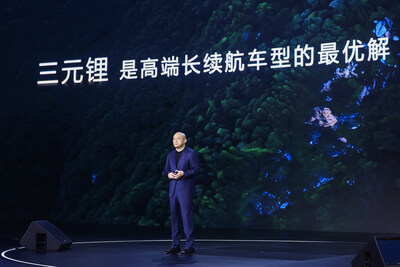
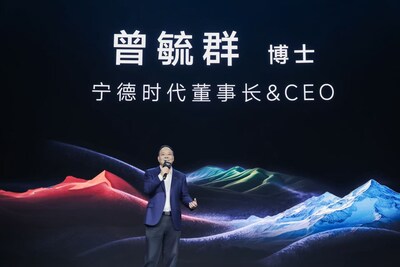
At the event, Dr.
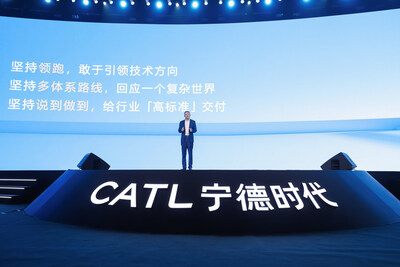
Third-Generation Shenxing Superf ast Charging Battery: Making Superfa st Charging and Ultra-Long Lifespan No Longer a Trade-Off
From an electrochemical standpoint, boosting charge rates while protecting battery lifespan hinges on one primary factor: temperature rise, not trickle current. As the Arrhenius equation shows, a 10°C increase in battery temperature can roughly double the rate of internal side reactions--an effect that can significantly shorten cycle life.
The third-generation Shenxing Superfast Charging Battery addresses heat generation and dissipation through three major measures: reduced heat production during operation, stronger thermal propagation, and higher precision control. As a result, after 1,000 complete cycles, the battery's capacity retention remains above 90%, achieving an optimal balance between extreme superfast charging and ultra-long service life.
The latest third-generation Shenxing Superfast Charging Battery has reached what is claimed to be the industry's strongest capability: an equivalent 10C and a peak 15C charging rate. Charging from 10% to 35% SOC (State of Charge) takes just 1 minute; from 10% to 80% SOC takes 3 minutes and 44 seconds; and from 10% to 98% SOC takes 6 minutes and 27 seconds. Even at −30°C in extreme cold conditions, charging from 20% to 98% SOC takes about 9 minutes.
In addition, by combining battery self-heating technology with a fully integrated supercharging and battery-swapping network, the system is designed to enable low-temperature superfast charging that is not limited by charging piles--offering both fast charging and battery swapping.
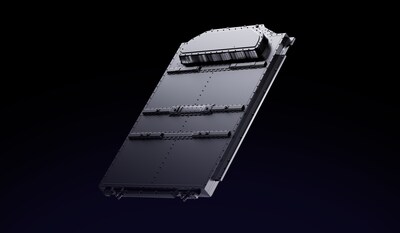
Third-generation Qilin Battery: L ighter , Stronger , More Premium , Redefining EV Excellence
Historically, achieving long range in premium EVs with LFP batteries has relied on simply adding more capacity -- an approach that inevitably compromises vehicle lightweighting.
The third-generation Qilin Battery is designed for premium long-range EVs, achieving a cell energy density of 280 Wh/kg and enabling 1,000 km range while supporting 10C superfast charging.
The battery delivers 3 MW peak power, doubling the output of the second-generation Qilin track battery which competed on the Nürburgring (1,330 kW).
The entire battery pack weighs only 625 kg. Compared with equivalent LFP systems, this represents a weight reduction of 255 kg and space savings of 112 litres. The lightweighting metrics deliver exceptionally significant benefits:
- Energy consumption per 100 km decreases by more than 6%, saving approximately 0.78 kWh per 100 km. Across a fleet of one million vehicles travelling 20,000 km annually, this equates to 156 million kWh in electricity savings and a reduction of 78,500 tonnes of CO₂ emissions.
- Performance and safety improvements include a 0.6–second reduction in 0–100 km/h acceleration, a 12% shorter overtaking risk window, an 8% higher moose test speed, a 6.5% lower body roll angle, a 15–25% gain in obstacle avoidance capability, and approximately 1.44 metres shorter braking distance.
- Durability is enhanced, with chassis component life extended by 40% and tyre life by over 30%, increasing replacement intervals by at least 10,000 km. The 112 litres of space saved can increase cabin headroom by at least 18 mm.
Building on the national standard for NP (No Thermal Propagation), safety is strengthened through "thermal-electrical separation", with each cell incorporating an independent sealed exhaust channel to isolate thermal events and prevent propagation, ensuring "heat takes the heat path, electricity takes the electrical path".
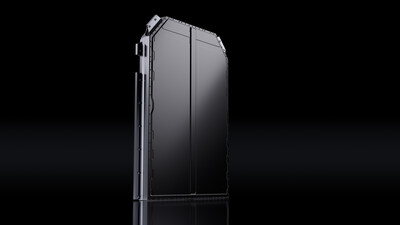
Qilin Condensed Battery: Aviation-Grade Technology Applied to Passenger Vehicles for the First Time
The Qilin Condensed Battery applies aviation-grade technology to passenger vehicles for the first time, achieving 350 Wh/kg cell energy density and 760 Wh/L volumetric energy density -- setting a new record for mass-produced batteries. This enables 1,500 km range for sedans and over 1,000 km for large SUVs, with pack weight controlled within 650 kg.
The condensed battery features a high-nickel cathode and low-expansion silicon-carbon anode, boosting energy density by 50 Wh/kg. Its first-ever aviation-grade titanium alloy case reduced thickness by 60% and weight by 30%, while tripling unit strength and delivering an additional 20 Wh/kg in energy density.
The technology builds on
Replacing liquid electrolyte with a condensed system eliminates risks associated with leakage and combustion, achieving "no liquid to leak, no liquid to ignite". At the same time,
Second-generation Freevoy Super Hybrid Battery: Bringing Hybrids into the 600 km Pure Electric Era
The second-generation Freevoy Super Hybrid Battery extends all-electric range to up to 600 km and standardises 10C superfast charging. It pioneers a "super hybrid technology" that integrates LFP and NCM materials through gradient-uniform mixing, with the olivine crystal structure of LFP serving as the core backbone, enabling a uniform hybrid of LFP and NCM materials at the powder particle level.
This achieves an energy density of 230 Wh/kg and increases range by over 15% without increasing pack weight compared with single LFP systems. This enables full coverage from mainstream family use to high-end, all-round hybrid scenarios, delivering optimal solutions across diverse applications.
The LFP version delivers up to 500 km pure electric range, enabling a "once-a-week charging" experience for daily commuting. The NCM version further extends pure electric range beyond 600 km, with total vehicle range exceeding 2,000 km, enabling a seamless dual-use experience for both daily electric driving and long-distance travel.
The system delivers 1.5 MW of instantaneous power at full charge and maintains 1.2 MW at 20% SOC, addressing power degradation in low-charge conditions. In off-road scenarios requiring over 350 kW output, the system provides more than three times the required power, ensuring consistent performance even at low charge levels.
Safety features include a reinforced bottom coating capable of withstanding 1,500 joules of impact energy (ten times the national standard) and waterproof sealing that allows continuous immersion in 2 metres of water for over 200 hours without performance degradation.
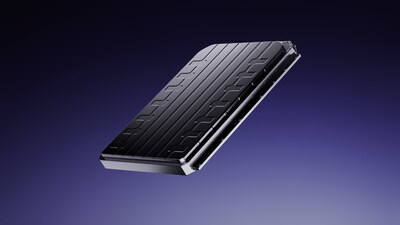
Naxtra S odium-ion Battery: A chieving GWh-scale S odium-ion I ndustrialisation
The Naxtra Sodium-ion Battery marks
In 2026,
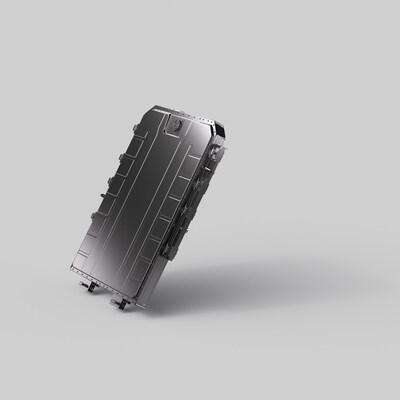
Integrated S upercharging and B attery-swapping N etwork: A Unified Replenishment Architecture
The integrated charge–swap stations feature shared compact substations and charging modules, reducing energy conversion steps and lowering overall power loss by more than 13 percentage points compared with conventional storage-equipped charging stations. In emergency scenarios, station batteries can discharge directly to charging piles, driving equipment utilization rate above 85%. This enables a service capacity of 3× per parking space compared with conventional storage-equipped charging stations, while the fixed investment cost of the supercharging segment is reduced to only one-fifth of comparable systems.
In terms of network deployment,
Together with automakers and energy partners,
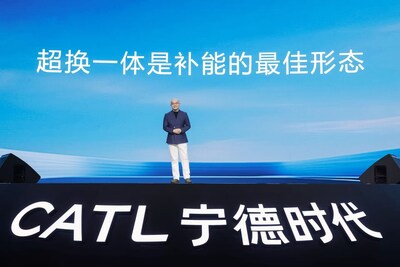
Advancing full-scenario energy solutions
From five battery products covering the full material spectrum to an integrated supercharging and battery-swapping network,
 View original content to download multimedia:https://www.prnewswire.com/news-releases/catl-unveils-six-major-innovations-multi-chemistry-systems-to-redefine-new-energy-mobility-experience-302749135.html
SOURCE

